
AI Investment Is Moving Beyond Software
Arihant · 11 Aug 2026 · 2 min read
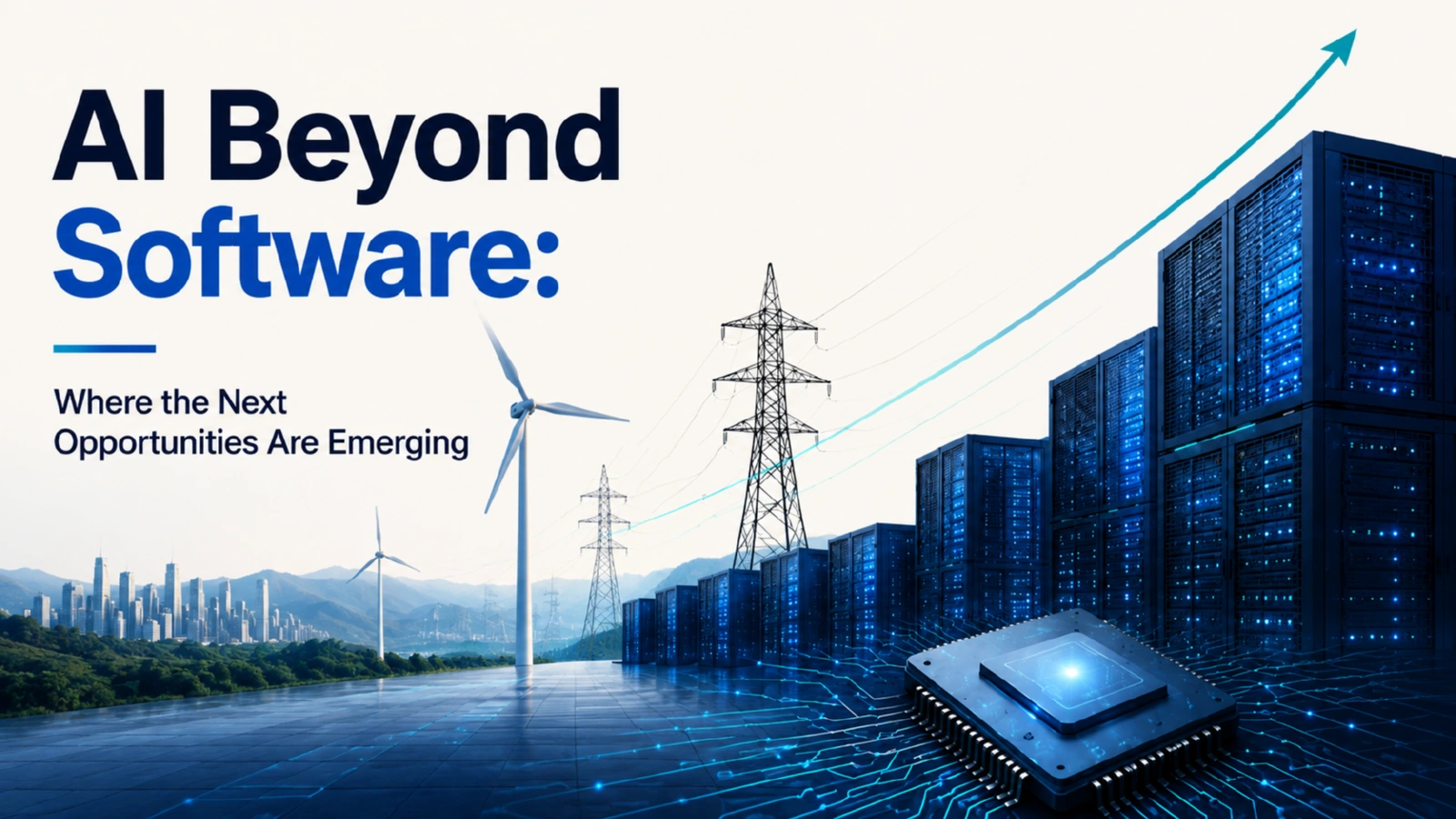
Power, Chips and Data Centres Are the New BattlegroundFor the last few years, most AI investment attention was on software companies and AI models. Now the focus is expanding to the physical infrastructure needed to run AI.AI systems need huge computing power, which means more demand for:
- Advanced chips and GPUs
- Data centres
- Electricity and power grids
- Cooling systems
- Cloud infrastructure
The AI opportunity is therefore becoming much broader than software alone.
Data Centres Are at the Centre of the AI Boom
AI models are trained and operated inside large data centres. As AI usage grows, companies need more servers, computing capacity and storage.Major technology companies are making very large long-term commitments to data-centre capacity. Reuters reported that Microsoft, Meta, Oracle, Amazon and Alphabet together have committed about $1.09 trillion in future lease payments, largely linked to data-centre infrastructure. This shows that AI is becoming a major infrastructure investment cycle, not only a technology trend.Key idea:
More AI use → More computing → More data centres → More infrastructure spending.
Electricity Could Become a Major Bottleneck
AI data centres consume a large amount of electricity.According to the International Energy Agency:
- Data centres used about 1.5% of global electricity in 2024.
- Their electricity demand could more than double to around 945 TWh by 2030.
- That would be roughly 3% of global electricity consumption.
A traditional data centre may use 10–25 MW of power, while a large AI-focused data centre can require more than 100 MW. This creates opportunities in power generation, renewable energy, grids, batteries and energy infrastructure.
Chips Are the Engine Behind AI
AI cannot run without advanced semiconductors.Powerful GPUs and specialised AI chips perform billions of calculations required for training and running AI models. As AI demand increases, companies need more:
- GPUs and AI processors
- High-bandwidth memory
- Semiconductor manufacturing capacity
- Networking equipment
- Advanced cooling systems
This makes the semiconductor supply chain one of the most important parts of the AI investment story.At the same time, investors are becoming more careful about the amount being spent. For example, Alphabet reported $44.92 billion of capital expenditure in Q2 2026, contributing to negative free cash flow despite strong earnings.
What Does This Mean for Global Investors?
The AI investment opportunity is becoming a complete ecosystem:AI Software → Chips → Data Centres → Power → Cooling → Grid InfrastructureThis means investors may increasingly look beyond traditional software companies toward businesses supplying the infrastructure behind AI.Potential investment themes include:
- Semiconductor companies
- Data-centre operators
- Cloud providers
- Electricity generators
- Renewable and nuclear power
- Grid and transmission companies
- Cooling and electrical equipment providers
The opportunity is large, but so is the risk. Massive spending only creates value if companies can generate enough future revenue and cash flow from their AI investments. Reuters notes that investors are increasingly focusing on free cash flow and returns on AI capital spending, rather than earnings growth alone.
Want a Chartered Accountant on your return?
Book a free demo and see how FINWEL files, reviews and advises, end to end.
On this page
Start managing your money with FINWEL.
Create your account and file, invest and plan, with a Chartered Accountant in your corner.