
No Deadlines No Panic. Just Strategy.
Arihant · 25 Sept 2026 · 1 min read
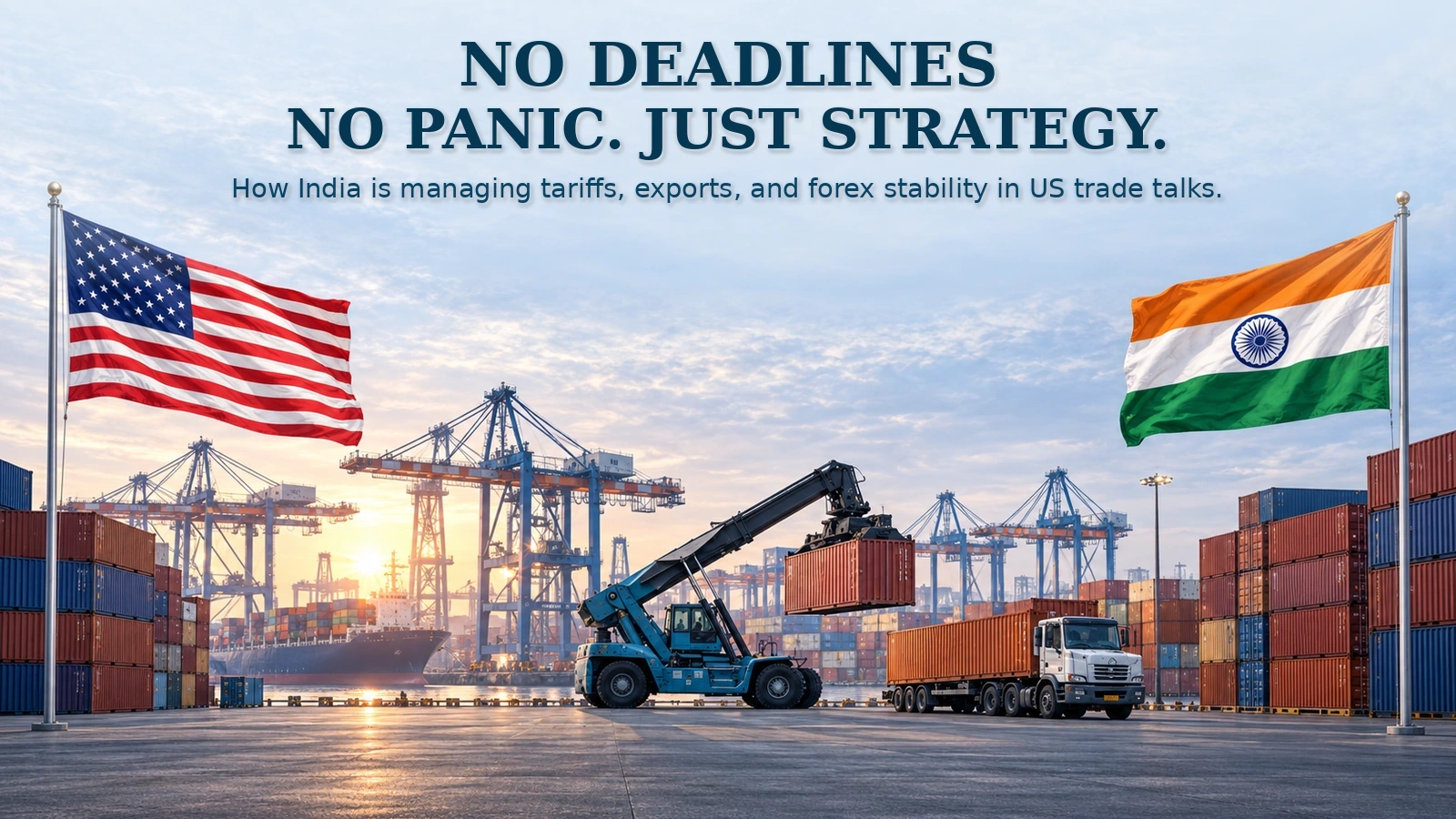
Why India–US trade discussions matter financially -
On the surface, it looks like routine diplomacy officials meeting over video calls, statements about “ongoing discussions,” and no firm deadlines. But beneath that calm surface, decisions are being shaped that directly impact export revenues, corporate profitability, and India’s long-term economic positioning.
The Moment Of Pressure
The US tariffs created clear financial pressure through margin compression, working-capital stress, and potential market-share loss- conditions that would typically slow exports sharply. Indian exports remained stable, the US stayed India’s largest export market, and electronics continued to perform well, reflecting strong demand, pricing power, and improved competitiveness.
Risk Management Over Reaction
Instead of reacting defensively, India focused on diversifying export markets, strengthening competitiveness, and preserving foreign exchange stability. This reduces over-dependence on a single market and shields the economy from policy shocks—core principles of financial risk management.
The Bigger Financial Signal
The same discipline is visible in India–EU FTA negotiations. With most chapters finalised, India is still avoiding rushed closures. The emphasis remains on sustainable trade flows, fiscal stability, and long-term growth rather than headline-driven deals.
Why India Is Holding Its Line
This is where strategy matters. A rushed trade deal may offer short-term relief but can permanently weaken domestic industries if terms are unfavourable. India’s approach has been deliberate: negotiate patiently, protect core sectors, and commit only when the financial and strategic balance is right.
Want a Chartered Accountant on your return?
Book a free demo and see how FINWEL files, reviews and advises, end to end.
On this page
Start managing your money with FINWEL.
Create your account and file, invest and plan, with a Chartered Accountant in your corner.