
RBI Raises Repo Rate: What Changes for You?
Arihant · 9 Oct 2026 · 2 min read
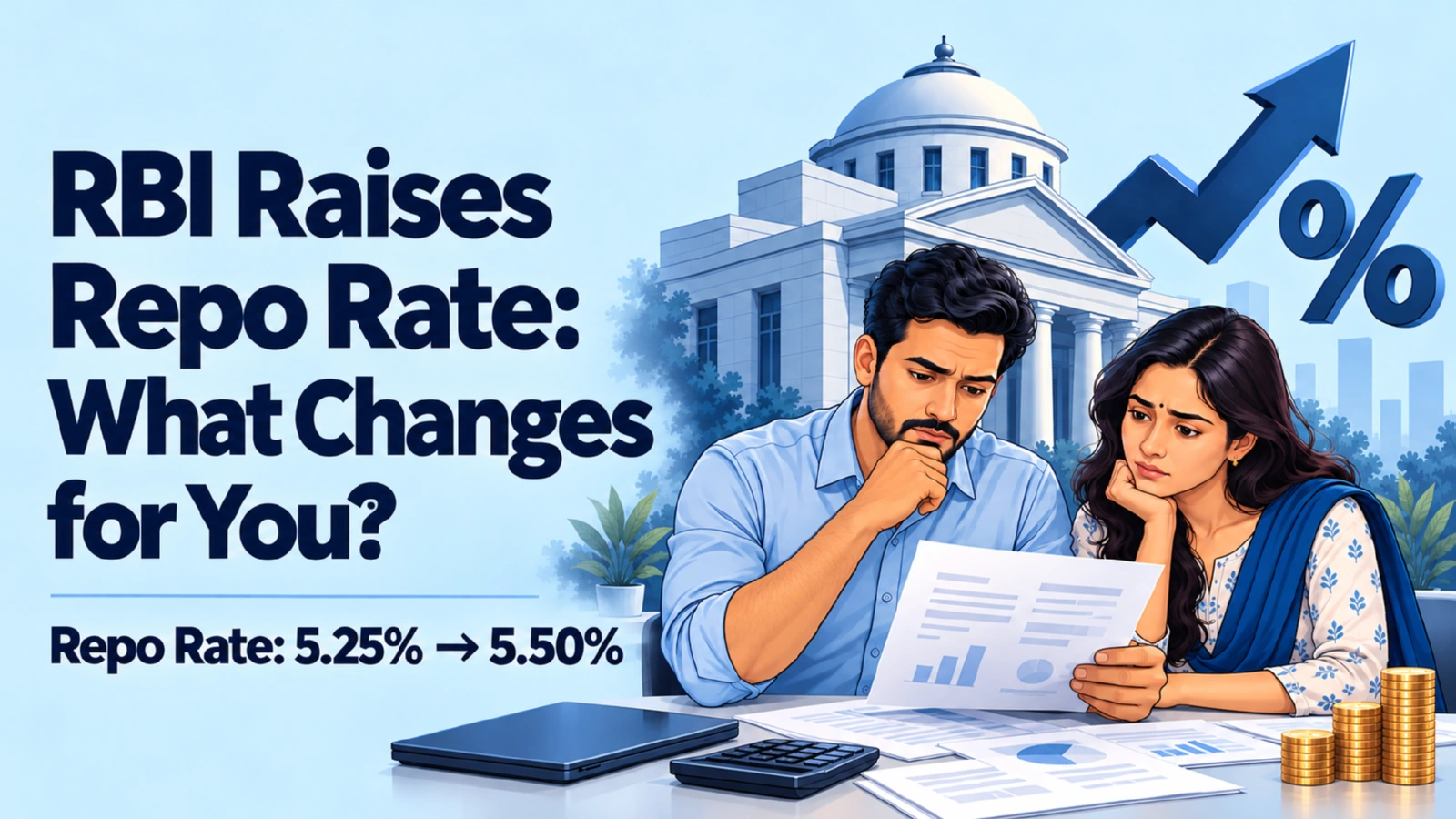
On 7 October 2026, RBI raised the repo rate by 25 basis points, from 5.25% to 5.50%.25 basis points = 0.25 percentage points.RBI also adopted a “calibrated tightening” stance, signalling that near-term rate cuts are off the table. Future decisions will depend on inflation and growth.Why it matters: The decision influences loan costs, deposit returns, and financial markets.
What Is the Repo Rate?
- Borrowing can become costlier: Floating-rate and new loan rates may rise.
- Saving may become more attractive: Banks may increase rates on new deposits.
- Spending can moderate: Households and businesses may reduce borrowing.
- Inflation pressures can ease over time: Slower demand can limit wider price increases.
- The change is gradual: Loan benchmarks, reset dates, and bank funding costs determine how quickly it reaches customers.
A Little History: Rates Move in Cycles
RBI adjusts interest rates as inflation and economic conditions change.2022–23: A tightening cycle took the repo rate to 6.50% in February 2023.2025: Cuts totalling 1.25 percentage points brought it down to 5.25%.October 2026: Renewed inflation concerns prompted an increase to 5.50%.What this tells us: Borrowers and investors should plan for changing interest rates rather than assume rates will keep falling.
Why Did RBI Raise Rates Now?
- RBI highlighted growing inflation risks: Consumer inflation increased: From 4.5% in July to 4.8% in August 2026.
- Food supply faced pressure: Deficient monsoon rainfall and El Niño conditions created risks.
- Energy costs remained elevated: Higher oil prices can increase transport and production costs.
- Price pressures broadened: Inflation was spreading to more goods and services.
- The objective: Prevent inflation from becoming persistent. Higher rates cannot directly fix food shortages or lower global oil prices.
Real Impact: Banks Raised Lending Rates
- Punjab National Bank: Lending benchmark increased from 8.10% to 8.35%.
- Bank of India: Increased from 8.10% to 8.35%.
- Indian Bank: Increased from 7.95% to 8.20%.
- Bank of Baroda: Increased from 7.90% to 8.15%.
- For borrowers: Linked floating-rate loans may have higher EMIs, longer repayment tenures or both at the next reset.
- For savers: New or renewed FDs may offer better rates if banks revise deposit pricing. Existing fixed-rate FDs generally retain their booked rate.
Want a Chartered Accountant on your return?
Book a free demo and see how FINWEL files, reviews and advises, end to end.
On this page
Start managing your money with FINWEL.
Create your account and file, invest and plan, with a Chartered Accountant in your corner.