
What is an ADR?
Arihant · 6 Oct 2026 · 3 min read
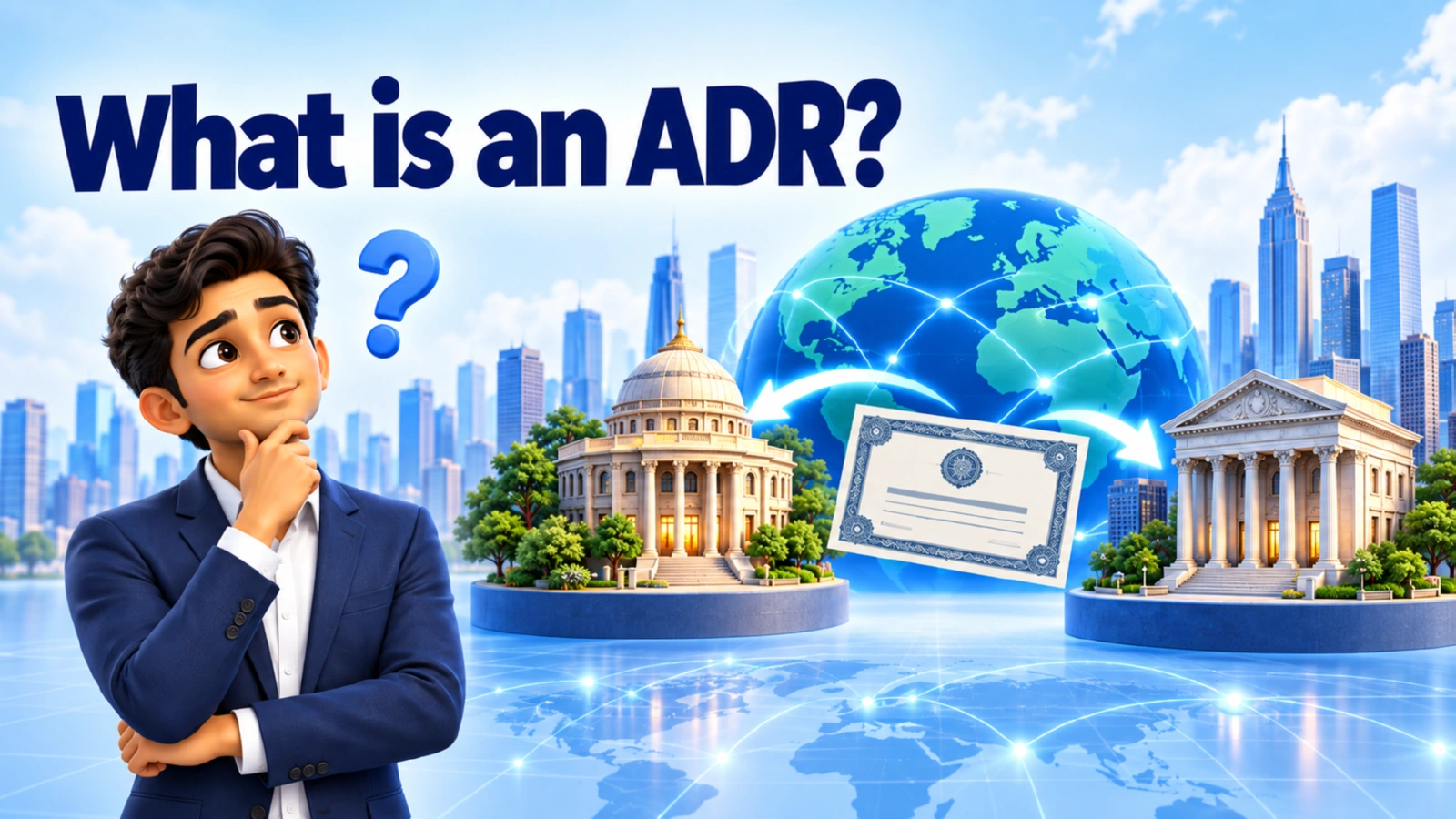
An American Depositary Receipt (ADR) is a negotiable certificate representing an interest in the shares of a non-US company.A US depositary bank issues the ADR, while the underlying shares are held through a custodian in the company’s home market.ADRs trade in US dollars, either on a US stock exchange or in the over-the-counter (OTC) market.Each American Depositary Share (ADS) can represent one share, multiple shares, or a fraction of a share, depending on the program.You gain exposure to a foreign company through a US-traded security.
ADR vs underlying share: what changes?
- Trading market: The underlying share trades in the company’s home market, while the ADR trades on a US exchange or in the OTC market.
- Trading currency: The underlying share trades in the local currency, while the ADR trades in US dollars.
- Ownership structure: The underlying share is a direct equity share. An ADR represents an interest in the underlying foreign shares.
- Additional costs: Underlying shares may involve local trading and custody costs. ADRs may include depositary fees.
- Share ratio: One ADS may represent one share, multiple shares or a fraction of one underlying share.
- Important: Always check the ADS-to-share ratio before comparing ADR and local-share prices.
Why can ADR and local share prices differ?
Both represent exposure to the same company, but their prices may differ after adjusting for currency and the share ratio.
To compare them:
- Reference ADS value = Local share price × underlying shares per ADS ÷ local currency per US dollar
- An ADS price above this reference indicates a premium; below it indicates a discount.
What can affect the gap?
- Trading hours: The markets may react to news at different times.
- Demand and liquidity: Buying interest and trading activity differ between markets.
Exchange rates:
- Currency movements change the dollar equivalent of the local share price.
Conversion costs and restrictions:
- Creating or cancelling ADSs can involve fees and operational or regulatory limits.
A premium or discount can change—it is not guaranteed profit.
Real Example: Infosys
- Market snapshot: 5 October 2026
- ADS ratio: 1 Infosys ADS represents 1 equity share
- NSE closing price: ₹1,020.50
- NYSE ADS closing price: $10.76
- Exchange rate used: ₹96.2973 per US dollar
- Converted NSE price: ₹1,020.50 ÷ ₹96.2973 ≈ $10.60
- Price difference: The NYSE ADS traded at approximately a 1.53% premium to the converted NSE closing price.
- Key point: Even with a 1:1 ratio, prices may differ because of currency movements, trading hours, market demand, liquidity and costs.
Fees, dividends and voting: what changes?
1. Depositary fees
- Beyond brokerage, ADR holders may pay fees for administration, cash distributions, and issuing or cancelling ADSs. Charges vary by program—check the deposit agreement and your broker’s fee schedule.
2. Dividend payments
- The depositary generally receives dividends in the company’s local currency and converts them into US dollars. Your payment may be reduced by withholding taxes, depositary fees, and currency-conversion expenses.
3. Voting rights
- Where the program provides voting rights, holders submit instructions through the depositary. Follow its deadlines and procedures to have the underlying shares voted.
4. Conversion into underlying shares
- ADRs may be surrendered for the underlying shares, subject to the deposit agreement, applicable restrictions, fees, and your broker’s ability to process the request.
- Compare your net dividend and total holding costs—not just the quoted share price.
Before you invest, check these five things
- Share ratio: How many underlying shares does each ADS represent?
- Price comparison: After adjusting for currency and the ratio, is it trading at a premium or discount?
- Total costs: What brokerage, depositary, and currency-conversion charges apply?
- Shareholder rights: How are dividends, voting, and corporate actions handled?
- Tax obligations: Which dividend, capital-gains, and reporting rules apply to your tax status?
A US listing alone does not determine tax treatment. Consider your circumstances and the security’s structure.Same company. Different route to ownership. Make an informed comparison.
Want a Chartered Accountant on your return?
Book a free demo and see how FINWEL files, reviews and advises, end to end.
On this page
Start managing your money with FINWEL.
Create your account and file, invest and plan, with a Chartered Accountant in your corner.