
Why silver ETF and silver fund returns differ
Team FINWEL · 30 Jul 2026 · 4 min read
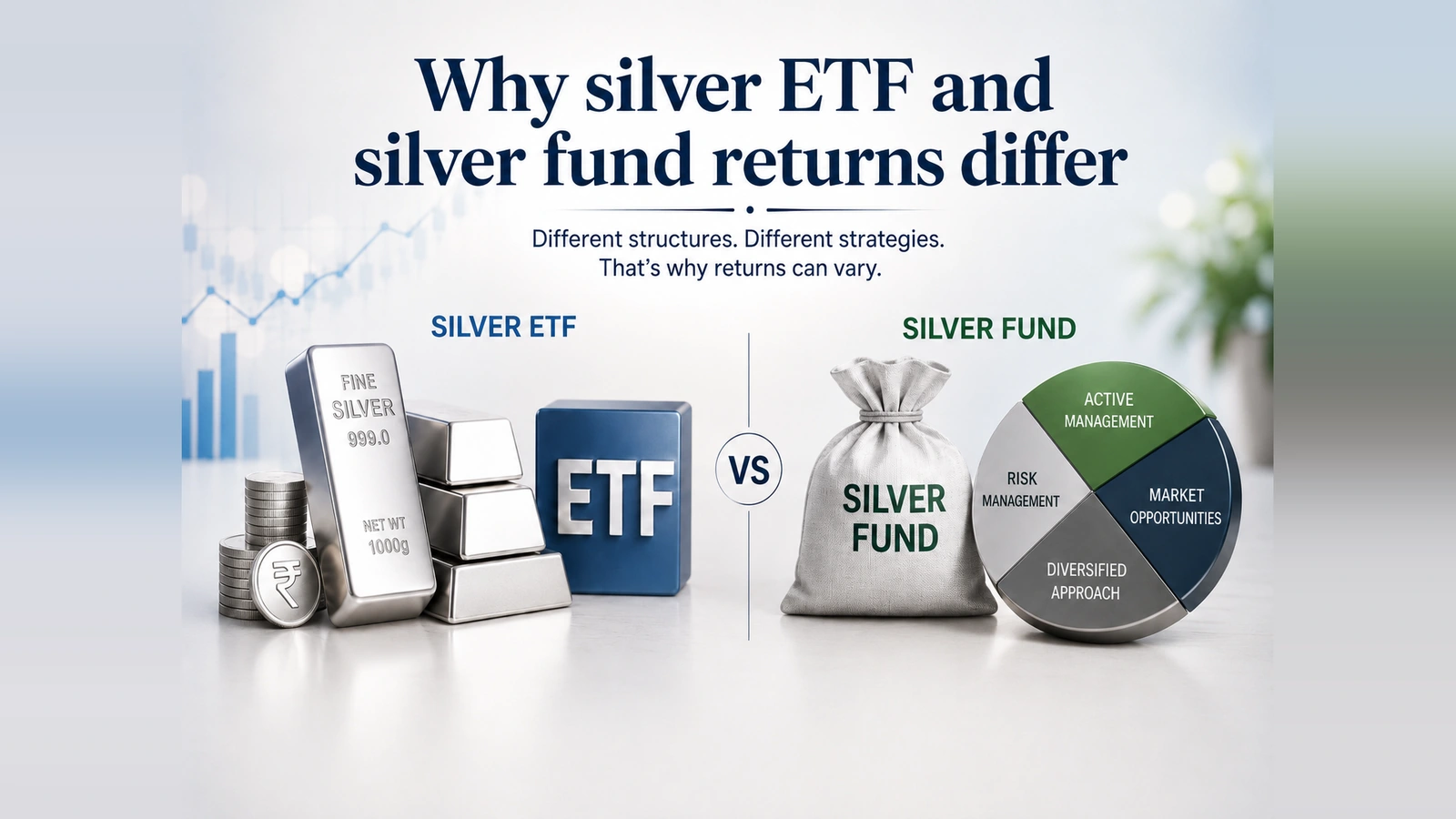
Two products track the same metal and report different returns over the same period. Investors notice, reasonably conclude that one is managed better than the other, and usually reach the wrong explanation. The gap comes from structure, and it has at least five separate causes.
The two are not the same product
A silver exchange traded fund holds physical silver and its units trade on the exchange. You need a demat account, and you buy at the market price.
A silver fund is generally a fund of funds. It holds units of the silver exchange traded fund rather than metal. You buy from the fund house at net asset value, no demat account is required, and a systematic investment plan is straightforward.
So the fund sits one layer further from the silver than the exchange traded fund does, and each layer introduces a reason for the returns to diverge.
The five causes, in rough order of size
One. Cost stacked on cost
The fund of funds charges its own expense ratio, and the underlying exchange traded fund charges its own inside that. The investor bears both. This alone guarantees the fund trails the exchange traded fund over time, before anything else happens.
Two. The fund of funds buys at market price
When money arrives, the fund of funds buys units of the exchange traded fund on the exchange, at whatever price the market is quoting. If it buys while the units trade at a premium, it has paid above the value of the silver, and that overpayment sits inside your net asset value.
Three. Cash drag and timing
Money arriving at a fund of funds is not invested at the same instant. There is always some cash awaiting deployment, and cash does not track silver. On a day silver moves sharply, that lag shows up as a difference.
Four. The exchange traded fund's own premium and discount
If you bought the exchange traded fund directly, your return depends on the price you paid, not the net asset value. Buy at a premium and sell at a discount and your return trails the metal even if the fund tracked perfectly. Silver's volatility makes these gaps wider than in gold.
Five. Tracking difference in the underlying fund
The exchange traded fund carries storage, custody and management costs that the silver price does not, and must handle creations and redemptions. A small persistent gap to the metal is normal and expected.
The sixth cause, which shows up only after tax
This one is often the largest and it is invisible in any returns table.
Exchange traded fund units are listed and become long term after twelve months, taxed at twelve and a half per cent. Fund of funds units are unlisted, so the threshold is twenty four months. Below that they are short term and taxed at your slab rate, which for a higher rate taxpayer is a substantially larger deduction.
So an investor holding for eighteen months has a long term gain through the exchange traded fund and a short term gain through the fund. Same silver, same period, materially different post tax outcome. Comparing the two on pre tax returns misses the biggest difference between them.
Why silver amplifies all of this
- Silver is more volatile than gold, so premiums and discounts are wider and move faster
- Silver has substantial industrial demand alongside investment demand, which makes its price behave differently from gold
- Physical silver is bulkier relative to its value, so storage and handling cost more
- These schemes are newer and smaller in India than their gold equivalents, and trading in some of them is thin
How to compare them properly
- Compare each against the domestic silver price, not against each other
- Look at the total cost through the fund of funds route, both layers together
- Check the premium or discount on the exchange traded fund at the time you would trade
- Check traded volume over recent days rather than assets under management
- Work out the post tax outcome for your actual intended holding period and your slab rate
- Decide whether you need a systematic investment plan and no demat account, which is the reason the fund of funds route exists
Neither route is mismanaged. They are different structures with different costs and different tax treatment, and the difference in reported returns is what you would expect rather than evidence that something has gone wrong.
Want a Chartered Accountant on your return?
Book a free demo and see how FINWEL files, reviews and advises, end to end.
On this page
Start managing your money with FINWEL.
Create your account and file, invest and plan, with a Chartered Accountant in your corner.